What is Sickle Cell Disease?
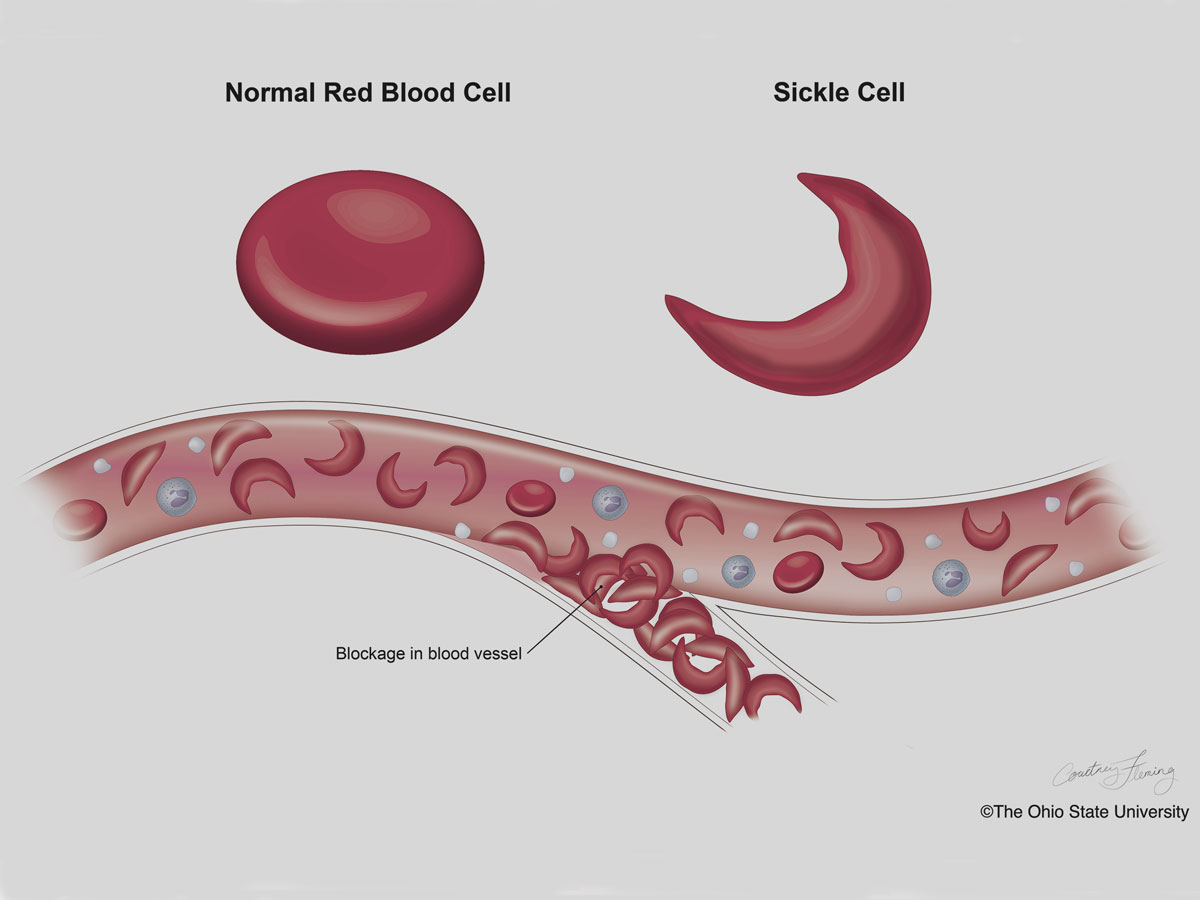
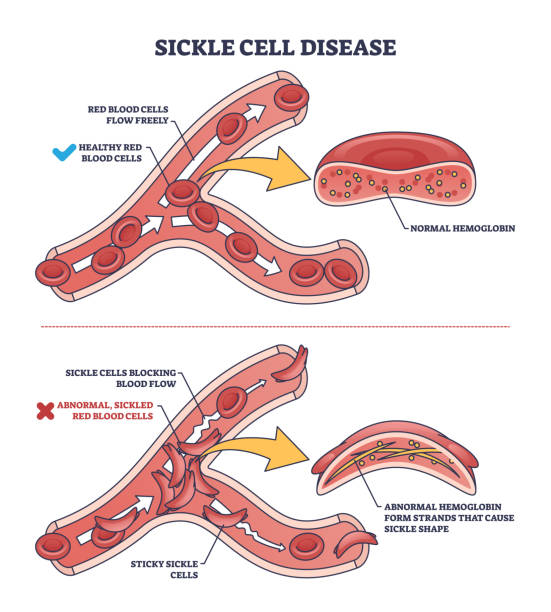
Sickle cell disease (SCD) is a group of inherited red blood cell disorders. Normal red blood cells are round and flexible, allowing them to move easily through blood vessels. In people with sickle cell disease, the red blood cells become rigid and shaped like a crescent moon or sickle, which causes them to get stuck in small blood vessels. This blocks the flow of oxygen to tissues, leading to pain and potential organ damage. More specifically, It is caused by a change in the gene that tells the body to make hemoglobin. Hemoglobin is the iron-rich compound in red blood cells that allows these cells to carry oxygen from the lungs to the rest of the body. The hemoglobin associated with sickle cell anemia causes red blood cells to become rigid, sticky and misshapen.
For a child to have sickle cell anemia, both parents must carry one copy of the sickle cell gene and pass both copies to the child. If only one parent passes the sickle cell gene to the child, that child will have the sickle cell trait. With one typical hemoglobin gene and one sickle cell gene, people with the sickle cell trait make both typical hemoglobin and sickle cell hemoglobin. Their blood might contain some sickle cells, but they generally don't have symptoms. They're carriers of the disease. That means they can pass the gene to their children.
Types of Sickle Cell Disease
There are several types of sickle cell disease, including:
- Sickle Cell Anemia (HbSS): The most common and severe form of the disease, where the body produces only sickle-shaped red blood cells.
- Hemoglobin SC Disease (HbSC): A milder form of sickle cell disease, resulting from a mix of hemoglobin S (sickle-shaped cells) and hemoglobin C.
- Hemoglobin S Beta Thalassemia (HbS-β Thalassemia): A type of sickle cell disease where the patient has both sickle cells and beta-thalassemia traits.